
New UK research reveals that 73% of mums say they felt barriers affecting their decision to pursue a career after having children.
Released as part of the ongoing ’Mums in Music’ campaign, conducted for Soprano and songwriter Lola Ganzarolli, the latest findings of 1,000 mums add fresh insight to the wider conversation around mum’s experiences in the creative industries. When asked which industries they think are good at supporting mums returning to the workplace after maternity leave, the music industry scored low, rated by only 7% of mums surveyed. The performing arts sector also scored poorly (6%) – compared to the healthcare (37%) and education (35%), hospitality (20%) and financial services (17%) sectors, which topped the poll.
Preliminary findings from the new research study, conducted this month, asked mums which the most significant barriers were affecting their decision to pursue a career after having children. Nationally, 28% of respondents reflected on the lack of time they had for themselves – choosing to put their children’s development and schedule first. In addition, 20% of mums cited the lack of access to affordable childcare and 17% said that, looking back, when planning a family, they did not fully or accurately anticipate the demands of parenting. In addition, 12% of respondents mentioned the lack of accommodating measures from their workplace.
Together, these emerging insights form part of a rolling study underpinning the campaign, which will continue to surface experiences from mums across Europe.
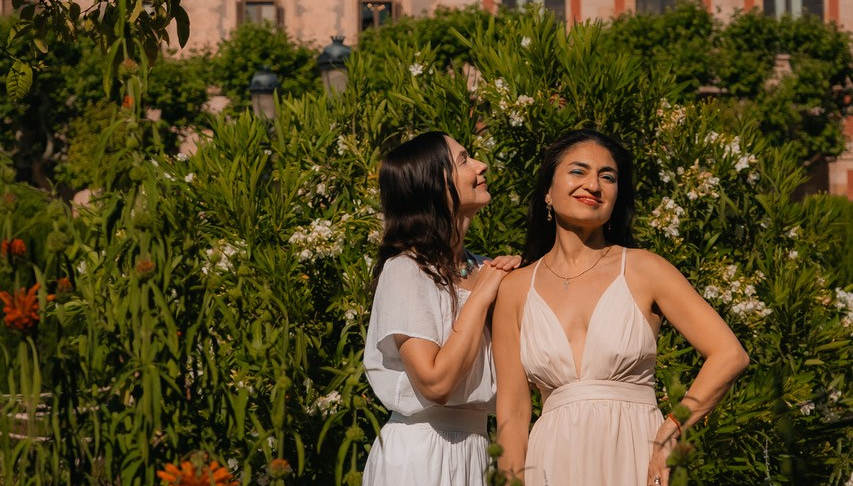
As part of the initiative, Lola recently joined forces with writer, poet and mother Maria Kabanova for a collaborative performance in Barcelona. Mums in Music and Arts saw the artists present intimate poetry and music exploring themes of family, femininity and the journey of motherhood. The collaboration provided the backdrop for a wider discussion about creativity, motherhood and the realities of sustaining an artistic life while raising children.
In Lola’s case motherhood meant a step back from the stage, but for many mothers in the creative sphere pregnancy means a nerve-wracking conversation with patrons and employers about how they will continue to work around pregnancy and parenthood. ‘When I got pregnant,’ Maria recalls, ‘I was working on a children’s show, and I was actually afraid to say that I was pregnant because I didn’t know how the show’s team would react.’ For Maria, who was contracted to write 12 episodes of the show, taking time out of her career was impossible, and so her child’s early days were punctuated by screenwriting sessions. ‘When I gave birth, I still had two more episodes to go,’ she explains, ‘but I said, “Hey, I have given birth, but I’ll keep going. I’m just letting you know that I now have a baby”. I managed to do it within the deadlines – I was voice recording while breastfeeding.’
Even beyond the ‘newborn trenches’, juggling motherhood with performance is a challenge. With a three-month-old baby at home, Maria is working hard to reach maximum creative output – with minimal sleep. ‘I have only slept for two to four hours a night for the last three months,’ she says. ‘I have “mummy brain” and it takes quite a lot of perseverance to try to do something.’ She is keen for audiences – and the industry as a whole – to better understand the obstacles she is facing behind the scenes: ‘When I’m rehearsing, sometimes I forget some lines and people don’t really realize what I’m going through, so they just think, “She’s forgetting lines”. It is a challenge, and it shouldn’t necessarily be so.’
However, while starting a family has its difficulties, it is also a period of enormous creative expansion. During her pregnancy, Lola discovered an entirely new creative outlet: ‘Songwriting found me in a time when I was getting pregnant and going through that journey of understanding my body, of praying for this miracle, for this blessing,’ she explains. ‘It was a super positive time, a very creative, very positive period.’ And once her first child was born, Lola’s creative capability exploded. ‘It was this opening of completely new spectrum of emotions, of colours. It has enriched my work.’
For both Maria and Lola, motherhood has become one of the most significant influences on their creative work. Most of the poetry Maria performed at Mums in Music and Arts was written when she was pregnant. ‘I would never explore these themes in poetry if I hadn’t had a child,’ says Maria. She had focused on screenwriting during her career, putting poetry to one side for a decade, but motherhood prompted her return to the artform with an entirely new emotional perspective, and a fresh palette of emotions and experiences to process: ‘I came back to writing poetry in a completely different style, with completely different themes. It helped me work through those issues.’
Motherhood has had a huge impact on the artistic output of both women. ‘I think we are sensitive as artists,’ says Lola. ‘Motherhood makes everything more heightened. The emotions become stronger.’ But the subject is woefully underexplored in the culture sector. Maria recalls trying to promote a podcast on the topic: ‘When I offered the subject to the head of the podcast, he said, “Are you sure it’s an interesting topic?”.’ According to Maria, motherhood is an interesting topic – in fact, it’s universal: ‘more than half of a human population can relate – probably 100 per cent because not all of us are mothers or parents, but we’re all children.’
With a lack of support for mothers in the creative industries prompting women to leave the sector, a significant segment of human experience is lost from the arts globally. While some women find their way back to creative work after raising children, others disappear from the sector altogether. Both Lola and Maria believe this represents not only a personal loss but a cultural one, as valuable experience, talent and creative voices risk being lost from the arts.
How can these vital voices be protected? For Maria, the solution begins at home, with a ‘very hands-on dad’ who looks after their daughter while Maria – between breastfeedings – conducts the interviews, photoshoots and events which her career demands. Maria finds this practical support invaluable as she continues to write. ‘Creativity needs some space,’ she explains. ‘It’s important to try and find support from those who understand the situation.’
For Lola, however, family is not always the solution, and structural change is needed to allow creatives like herself to pursue their work. ‘They say it takes a village to raise a child, and very often in modern society we don’t have that village who are able to step in.’ She believes practical support remains one of the biggest barriers facing mothers who want to continue creative careers. ‘There could be funding opportunities, initiatives inviting mums to collaborate, possibilities where mums from different walks of life and arts can create something unique and beautiful.’ Maria agrees that support needs to be practical as well as cultural. ‘You need time, you need money, you need help. It’s free time, its flexibility, and it’s recognising your talent.’
Maria believes her fellow creative is the ideal champion for the campaign. ‘She can actually understand the challenges, talk about them, and bring other women along,’ she explains. ‘We need more voices like that.’
Both women feel more understanding is needed around the vital role mothers play in society, and more effort taken to support them in continuing to pursue their art. ‘There needs to be greater respect for the time we give to creating families and raising children,’ says Maria. ‘It is a valuable contribution to society.’ That recognition lies at the centre of the Mums in Music conversation. Lola is connecting with like-minded creatives across Europe to launch a new Mums in Musiccampaign offering a platform for mums in music and the arts, as well as sharing research and insight to support a broader understanding of the issues that need to be tackled. The first piece of Mums in Music research will be published next month. The campaign will encourage women to continue their creative careers – and bring their whole selves to their art.‘It’s important to remember you’re an individual as well,’ explains Lola. ‘You haven’t lost yourself just because you’re a parent. I can grow as an artist and bring out all that I’ve experienced – from loss to birth, to all these loves and pains.’ The initiative also encourages mothers to have the confidence to choose a creative career. ‘Mothers will say, “I can’t, because I’ve got to put my children first”,’ says Maria. ‘But you would be able to do it and still put your children first if there was better support.’
For these two women – and for female creatives everywhere – motherhood is not a creative interruption. It is an inspiring experience in itself; one that continues to shape artists, enrich their work and deepen their understanding of the world. Lola, Maria and countless women like them are challenging the arts to recognise mothers not just as audiences, subjects or consumers of culture, but as creators with an important, universal story to tell. The Mums in Music campaign is now challenging the culture sector to ensure they have the support, confidence and opportunities to keep their artistic journeys alive.
Lola’s next performance will be at conductor Gianluca Marcianò’s Lerici Music Festival in Italy on 31 July.